Intro
In reviewing government reports on benefits processing and speaking with government agencies that operate these programs, the pattern that stands out is often not simply a technology failure. It is an ownership failure. The agency deploys technology to standardize intake and calculate eligibility for programs like the Supplemental Nutrition Assistance Program (SNAP), both of which technology processes well under timeliness pressure that is real and growing. The U.S. Department of Agriculture’s Food and Nutrition Service (FNS) told governors in April 2025 that 33 state SNAP agencies were out of compliance on application processing timelines and 20 were out of compliance on recertification timelines, against a federal requirement that eligible households receive benefits within 30 days, or seven days for those in urgent need. That pressure can push agencies toward automating more of the workflow, adjudication included. When adjudication is automated without accountable human review, later appeals can raise a difficult question: why was a specific benefit denied, and who was responsible for that decision?
The Challenge
Timeliness pressure pushes agencies toward full-workflow automation
FNS’s April 2025 letter documents a compliance problem spanning more than a decade, not a new one. When 33 states are out of compliance on application processing and 20 on recertification, the operational reflex can be to automate more of the workflow, faster. Under this kind of pressure, an intake and eligibility tool can be extended into territory it was never designed to adjudicate, because a fully automated pathway may appear to be the fastest way to move a timeliness number in the right direction on a dashboard.
Edge cases get folded into the routine pathway
As agencies process more cases through standardized intake, they collect more structured data that can improve the accuracy of initial eligibility calculations, while timeliness metrics may also improve. What can happen underneath is that the edge cases, household changes mid-cycle, self-employment income calculations, disability accommodations, expedited service determinations, get folded into the same automated pathway as the routine cases, and the caseworker who used to adjudicate them is either not looped in or is presented with a system recommendation they are expected to approve without meaningful review.
The U.S. Government Accountability Office’s (GAO) September 2024 review of USDA’s oversight of SNAP provides important context for why defensible workflows matter: an estimated 11.7 percent of SNAP benefits paid in fiscal year 2023, about $10.5 billion of $90.1 billion in outlays, were improper payments, up from 11.5 percent the year before. An improper payment rate does not diagnose where in the workflow the failure happened. It does, however, reinforce the need for agencies to be able to trace payment decisions back to the evidence, rules, reviews, and accountable people involved.
Appeal records and identity verification expose the same gap
The Payment Integrity Information Act of 2019 (PIIA) requires agencies to identify programs susceptible to significant improper payments, estimate improper payment rates annually, and report corrective action plans, which means every payment decision has to be defensible under review, not just fast. When an appeal reaches that review, the record has to show who decided, on what basis, and whether a human ever looked at the case.
If that record does not exist because a determination was fully automated, the agency has a governance problem regardless of whether the underlying eligibility calculation was technically correct. Identity verification is where this gap can show up earliest, before an eligibility decision is even made. The National Institute of Standards and Technology’s (NIST) Special Publication 800-63-4, Digital Identity Guidelines, published August 2025, sets three assurance levels, Identity Assurance Level, Authentication Assurance Level, and Federation Assurance Level, that agencies use to calibrate how rigorously an applicant’s identity must be proofed. When agencies apply a single assurance level uniformly instead of matching it to the program’s risk, either legitimate applicants can get blocked or the verification step can become poorly matched to the actual risk.
The Solution
Draw the adjudication boundary
Before an agency decides how technology should process benefits cases, it first needs to understand the workflow: what technology can determine, what it can recommend, what requires human judgment, who owns each decision, and how every decision will be documented and reviewed.
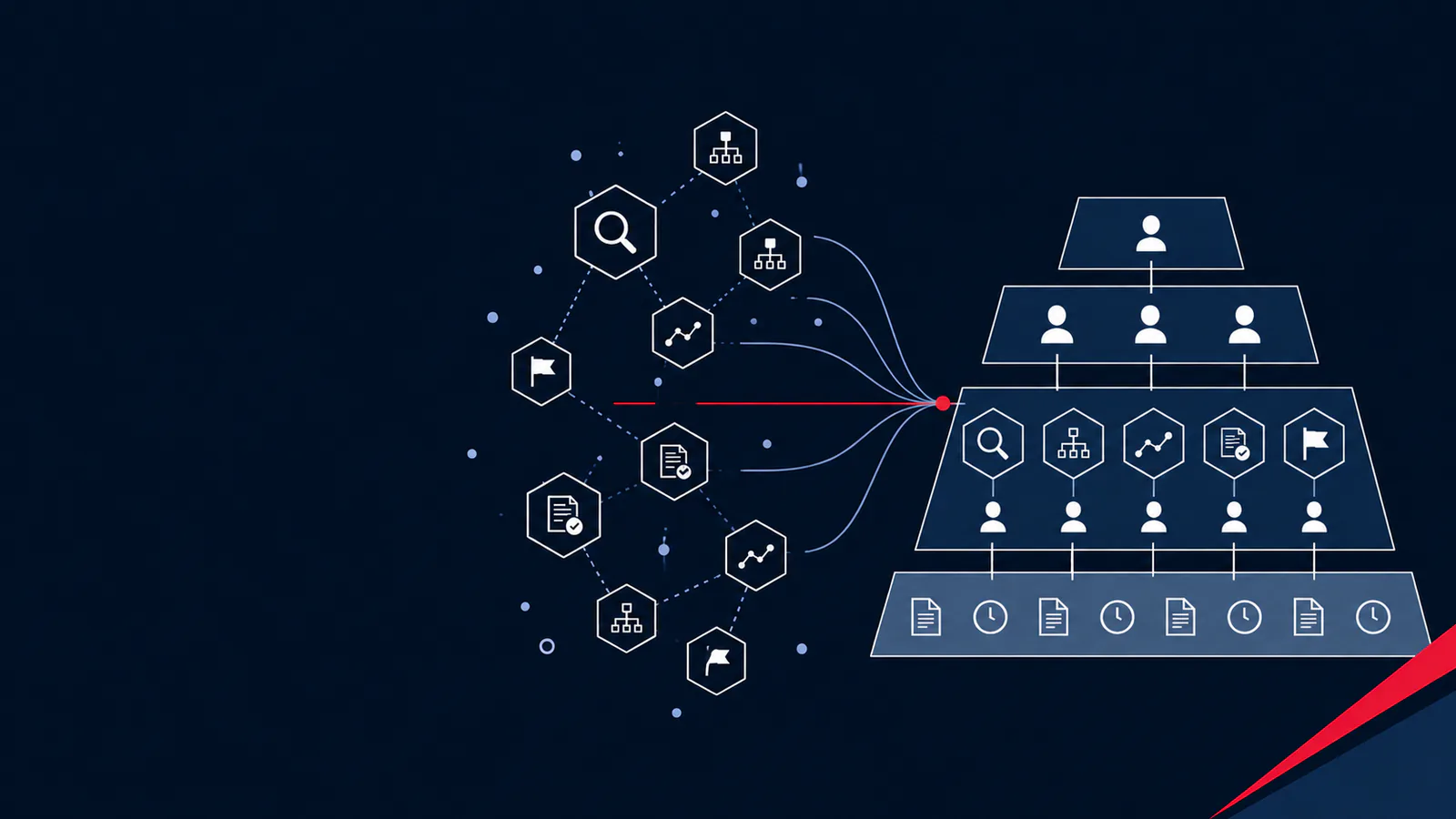
That becomes the adjudication boundary map. Every determination the workflow makes carries an explicit classification: technology-determined, for routine cases meeting defined criteria; technology-recommended, for cases where the system produces a recommendation for named human review; or human-adjudicated only, for cases involving discretion, exception, or appeal. Each classification carries its own workflow, its own ownership, and its own evidence requirement, so the boundary is a designed decision instead of whatever the software happens to default to.
The map should be built before a single eligibility rule is written, because the classification decision changes what the rules engine is allowed to do. A household income change reported mid-certification period, for example, may not belong in the technology-determined pathway simply because the math behind it is simple. The downstream effect on a family’s benefit level may put it in technology-recommended territory, routed to a caseworker who reviews the calculation and the household’s specific circumstances before it takes effect.
Assign named ownership at each boundary
Office of Management and Budget (OMB) Circular A-123, Appendix C, requires agencies spending more than $10 million annually on a program to assess improper payment risk at least once every three years and assigns agency accountability for that risk directly, not to a vendor or a tool. GovSoft’s approach applies that same accountability to the boundary map: a named person owns the technology-determined pathway’s accuracy, a named person owns the technology-recommended review queue, and a named person owns human-adjudicated cases. When a payment integrity risk assessment asks who is responsible for a category of error, the answer is a person, not a system description.
This ownership has to survive staff turnover, which is where accountability structures can quietly decay. An owner leaves, the position stays vacant for a review cycle, and the pathway they were accountable for can revert to nobody in particular. The map should make a vacancy in a named ownership role a flagged exception, not a silent gap, so an agency’s next improper payment risk assessment does not discover the accountability structure it reported to OMB stopped existing months earlier.
Build the immutability layer and route the appeal
Underneath the adjudication records sits an immutable evidence layer. Every determination, every human review, and every appeal outcome is preserved on write once, read many (WORM) storage. When a citizen appeals a denial six months later, the record of who made the decision, what the technology recommended, what the human reviewed, and how the determination was documented cannot be modified after the fact.
PIIA’s requirement that agencies report defensible corrective action plans only holds up if the underlying record does. Every appeal should route back through the workflow it originated in rather than into a completely disconnected process, so the appeal reviewer sees the same adjudication boundary classification, the same evidence, and the same named owner the original determination carried.
This matters most in the cases agencies may worry about least at the time: a routine, technology-determined approval that later turns out to rest on a household circumstance nobody flagged as an edge case. Because the immutable record shows exactly what the system evaluated and whether exception criteria were triggered at the time, the agency can evaluate the determination against what was actually known instead of reconstructing the case from memory once a reviewer or auditor asks about it months later.
Where AI fits
Inside this workflow, AI analyzes intake data, flags household changes and income patterns that fall outside routine criteria, and routes cases to the correct adjudication classification. AI surfaces which cases fit the technology-determined pathway’s defined criteria and which ones need a technology-recommended review or human-adjudicated attention.
AI does not adjudicate. A named human in the middle makes the determination on every case outside the routine pathway, because the cost of an automated system denying or approving a benefit without a documented, accountable human decision is not a risk this governance model accepts, especially in a program where an incorrect denial affects whether a household eats.
These classifications should be calibrated against the program’s own caseload, requirements, and risk patterns, not a generic eligibility model.
The Result
GovSoft has implemented a comparable human-in-the-middle approach in technology used by affiliates who represent a government agency, where artificial intelligence helps identify incorrect or incomplete transactions before they proceed further through the government-facing process. That experience does not mean GovSoft has implemented SNAP eligibility or benefits adjudication systems. It does illustrate how the same governance principle can apply: technology handles routine analysis, exceptions are surfaced earlier, and a human remains accountable when a transaction requires review.
Applied to benefits processing, the objective is to surface adjudication problems at the moment the case is processed rather than relying on appeal reversals, citizen complaints, or later audits to reveal them. The workflow requires a named human to complete the adjudication step for anything outside the routine, technology-determined pathway. Better documentation can make appeals easier to review, and edge cases that would otherwise remain buried inside a fully automated pathway become visible closer to the point of decision. Timeliness can still improve because routine cases continue to move through the technology-determined pathway efficiently.
Under this model, a program director receiving a legislative inquiry about a specific denied case should be able to pull the adjudication record and see what happened instead of asking a caseworker to reconstruct the decision from memory. That same record is what a payment integrity risk assessment under OMB’s Appendix C requirements needs: not just a rate, but a documented reason tied to an accountable decision-maker for the categories of error the agency reports.
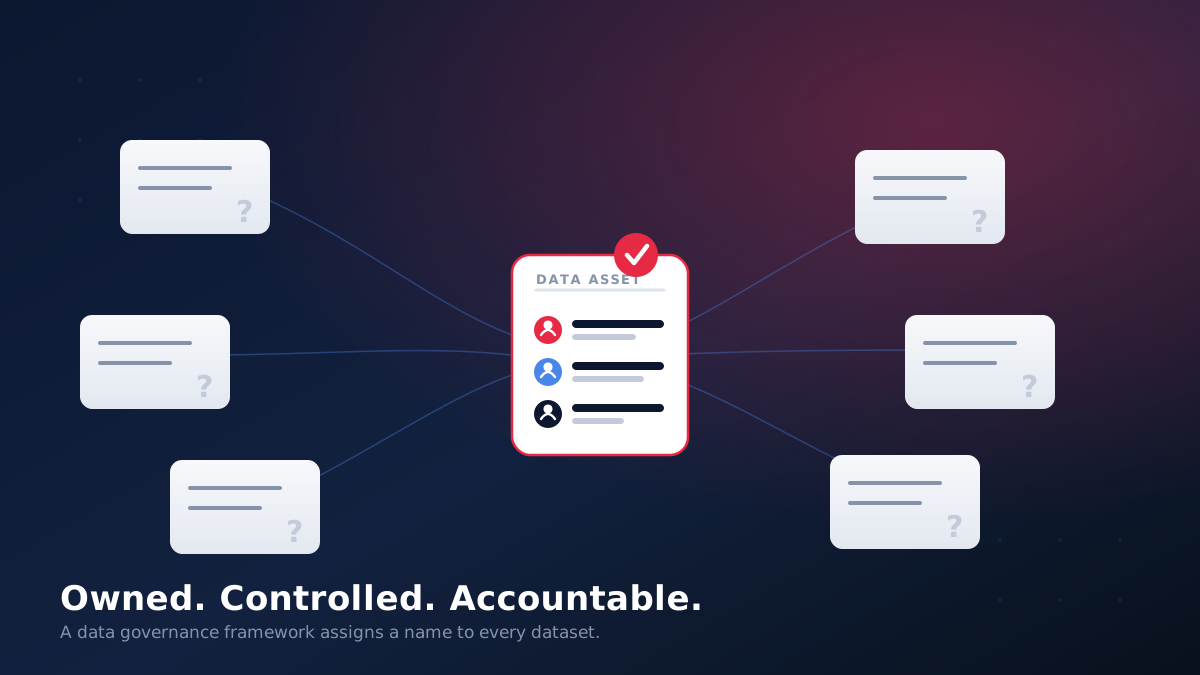
This connects to two patterns GovSoft has written about. The AI Management System piece describes the same named-ownership structure applied to how an organization sets accountability for its AI use; the adjudication boundary map is that structure applied specifically to a benefits determination workflow. The Data Governance Framework blog describes the evidence discipline this depends on, documented decisions and reviewable records applied across an organization’s data, which is exactly what the immutable evidence layer under every adjudication record provides.
Key Takeaways
- Technology-assisted benefits processing works when the boundary is drawn deliberately. Technology processes what it can defensibly process, and a named human adjudicates what only a human can defend under review.
- Timeliness pressure is what pushes the boundary. FNS found 33 state SNAP agencies out of compliance on application processing and 20 on recertification as of April 2025, pressure that can push agencies toward automating more of the workflow.
- An improper payment rate is a signal, not a diagnosis. GAO found an 11.7 percent SNAP improper payment rate in fiscal year 2023. That rate does not identify where a workflow failed, but it reinforces the need for payment decisions that can be traced to evidence, rules, review, and accountable ownership.
- The adjudication boundary map classifies every determination. Each one is technology-determined, technology-recommended, or human-adjudicated only, and each classification carries its own ownership and evidence requirement.
- Payment integrity accountability lands on the agency, not the system. OMB’s requirements assign that accountability directly and require risk assessment for programs above the $10 million threshold.
- The evidence layer has to be immutable. Write once, read many (WORM) storage preserves every determination, review, and appeal outcome so the record cannot be altered after the fact.
- AI analyzes, flags, and routes. It does not adjudicate. AI works at a scale no caseworker could match, but a named human in the middle makes every adjudication decision outside the routine pathway.
Technology-assisted benefits processing is not a question of how much of the workflow to automate. It is a question of where automation ends and a named, accountable human adjudicator begins. GovSoft is not a benefits eligibility software vendor, not a state modernization consultancy, and not a case management platform provider. GovSoft is the governance-structure partner that builds the adjudication boundary map, the named ownership, and the immutable evidence layer that make technology-assisted benefits processing defensible under appeal and audit, for government and entities operating within regulated industries.
This work connects directly to GovSoft’s writing on the AI Management System and the Data Governance Framework, both of which describe the same underlying discipline applied to different parts of an organization’s operations.
There are no upfront fees. GovSoft is paid from the operational value the work produces. If the software does not deliver, you do not pay.
Say hi at hello@govsoft.com.