Intro
Ask five people in a large organization who owns a given dataset and you will often get five answers, or, more tellingly, five people who each assume it is someone else. The data is used everywhere. It feeds reports, decisions, models, and disclosures across divisions that rarely coordinate. But ownership of it, the clear answer to who is accountable for its quality, who controls access to it, how long it is kept, and who decides what happens at the edges, tends to live nowhere in particular. Everyone uses the data. No one quite owns it.
As 2026 unfolds, that gap is getting harder to carry, because the same data now feeds automated systems and regulated decisions where the cost of an unowned error is higher and the questions come faster. A data governance framework is the structure that closes the gap. In the Government Accountability Office’s own definition, data governance is the framework or structure for ensuring that an organization’s data assets are transparent, accessible, and of sufficient quality to support its mission, improve operations, and provide useful information, comprising the authorities, roles, responsibilities, organizational structures, policies, processes, standards, and resources for the definition, stewardship, production, security, and use of data. For government departments and multi-division regulated industries, the symptoms are familiar: ownership is fragmented, definitions conflict, and no one clearly owns quality, access, retention, or exceptions. This piece treats those symptoms as what they are, the visible signs of ownership that were never assigned, and looks at what assigning it actually takes.
The Challenge
Fragmented ownership is the disease, and the rest are symptoms
It is tempting to treat conflicting definitions, inconsistent quality, and unclear retention as separate problems, each with its own fix. They are not separate. They are what fragmented ownership looks like from the outside. When no one owns a dataset, no one is positioned to settle what its fields mean, so two divisions define the same term two ways and both are right within their own walls. No one is positioned to set its quality bar, so quality varies by who last touched it. No one is positioned to decide how long it is kept, so it is kept forever or discarded inconsistently. The symptoms multiply because the single thing that would resolve them, a clear owner, is missing.
The mechanism is that data crosses organizational boundaries but accountability usually does not. A dataset created in one division is consumed in three others, but the accountability for it does not travel with it. Each division treats the data as an input it received rather than an asset it owns, and an input that arrived from elsewhere is nobody’s responsibility to govern. The GAO draws the line directly: data governance is the roles, responsibilities, policies, and procedures for making the decisions that ensure effective data management, and it is different from data management, which is implementing those decisions. The decisions are what go unmade when ownership is fragmented. The framework exists to make them assignable.
Conflicting definitions are a governance failure, not a vocabulary problem
When two parts of an organization mean different things by the same data element, the instinct is to treat it as a definitions cleanup, a matter of writing a glossary. The cleanup rarely holds, because the conflict is not really about words. It is about the absence of anyone with the authority to decide which definition wins and to make the decision stick across divisions that did not previously have to agree. A glossary written without that authority is a suggestion. The conflict returns the moment two divisions have a reason to disagree.
This is why, across its body of work on data governance, the GAO has identified resolving conflicts in how data standards are applied as one of the key practices a governance framework must perform, alongside developing and approving data standards, enforcing their consistent application, involving stakeholders in key decisions, and delineating roles and responsibilities for decision-making and accountability. The conflict-resolution function is a named practice because conflict is structural, not accidental. Divisions optimize for their own needs, and their definitions diverge as a result. A framework that assigns someone the authority to adjudicate, and that records the decision so it carries forward, is what turns a glossary from a wish into a standard.
Unowned exceptions are where the risk actually concentrates
Every data rule has exceptions, the record that does not fit the schema, the access request that falls outside the normal policy, the retention case the standard did not anticipate. In a fragmented environment, exceptions are exactly the cases no one owns, because they fall between the divisions that each handle the normal path. The exception gets handled informally, by whoever encountered it, without a record of who decided or why. And exceptions are where the consequence concentrates, because they are, by definition, the cases that departed from the controlled process.
The mechanism is that an unowned exception is an undocumented decision. Someone granted the unusual access, kept the record past the normal window, or accepted the data that did not validate, and did so without the decision being assigned to an accountable owner or captured for review. When an auditor or regulator later examines the process, the normal path is documented and defensible and the exceptions are neither. The framework’s job is to ensure exceptions are owned and recorded as deliberately as the rules they depart from, because the exception is where the unowned risk lives.
The standard an auditor applies assumes the ownership exists
The compliance stakes sit underneath all of this, because the standard an auditor brings assumes a level of ownership the fragmented organization has not established. The GAO’s guidance on assessing data reliability holds that data used as evidence must be assessable for its accuracy, completeness, and applicability. Each of those assessments presumes someone can speak for the data: someone who can attest to its accuracy, account for its completeness, and confirm it is appropriate for the use. Fragmented ownership means there is often no such someone, and data that no one can speak for is, by the auditor’s standard, data of unestablished reliability.
The mechanism is that accountability is what an audit ultimately tests. An auditor is not only checking whether the data is good; they are checking whether the organization can demonstrate it is good, which requires an accountable party and a record. The framework supplies both. Without it, the organization arrives at the audit with data it uses confidently every day but cannot formally vouch for, because the ownership that would let it vouch was never assigned.
The Solution
Assign ownership to named roles, not to divisions
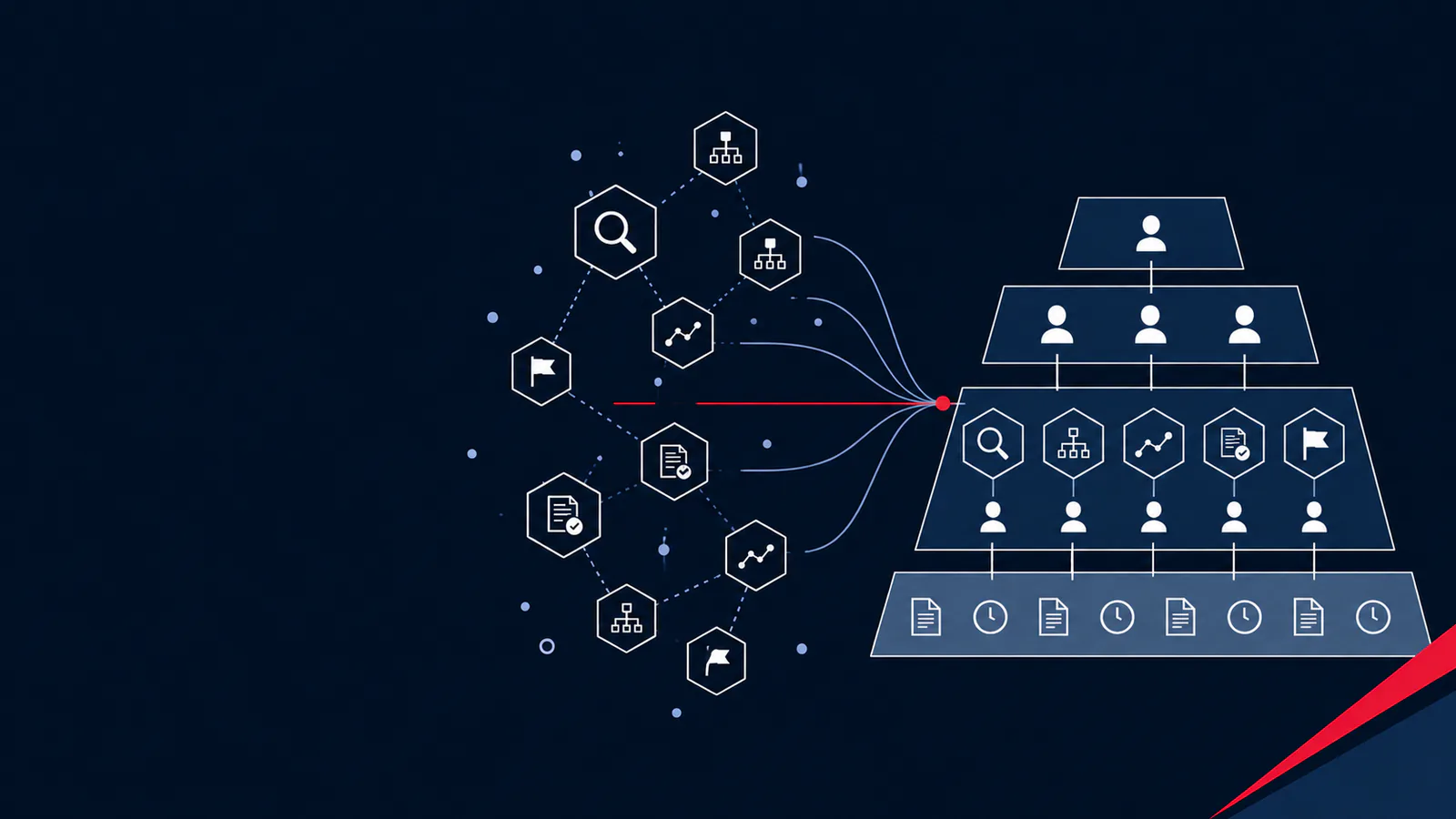
The first move is to make ownership a property of named roles rather than a vague collective responsibility. The federal model offers a concrete template here, because law made it concrete. Title II of the Foundations for Evidence-Based Policymaking Act requires the head of each agency to designate a Chief Data Officer, and assigns that officer responsibility for the agency’s data governance, including lifecycle data management, managing data assets through the standardization, sharing, and publication of data, and ensuring the agency’s data conforms with data management best practices. The point worth taking from the model is not the specific title but the principle it embodies: a single senior role is made accountable for the data as an asset, and the responsibility is assigned by name rather than assumed.
Below that senior role, ownership distributes to data stewards who own specific data domains, the people who can actually speak for a given dataset’s meaning, quality, and appropriate use. The GAO frames this as delineating roles and responsibilities for decision-making and accountability, one of its named key practices. The framework works when every consequential dataset has a steward who can be named, and when the question who owns this has a person as its answer rather than a department.
Give the framework a body that can decide and resolve
Assigning owners is necessary but not sufficient, because the hardest governance questions cross domains and need a venue to be settled. This is the role of a data governance body, the board or council that makes enterprise-level decisions, sets the standards individual stewards apply, and resolves the conflicts that arise when divisions disagree. The federal pattern again makes this concrete: OMB directed agencies to establish a data governance body chaired by the Chief Data Officer, with membership drawn from across the organization’s business, data, and financial functions. That is the venue where cross-cutting data decisions are made and where the authority to resolve definitional conflicts actually lives.
The reason the body matters is that it is where the conflict-resolution practice the GAO names becomes operational. A definitional dispute between two divisions has nowhere to go in a fragmented organization, so it persists. With a governance body, it has a venue, an authority, and a record. The body decides which definition stands, the decision is documented, and the standard carries forward because an accountable structure stands behind it. The framework turns disagreement from a permanent condition into a resolvable event.
Make controls and exceptions equally owned
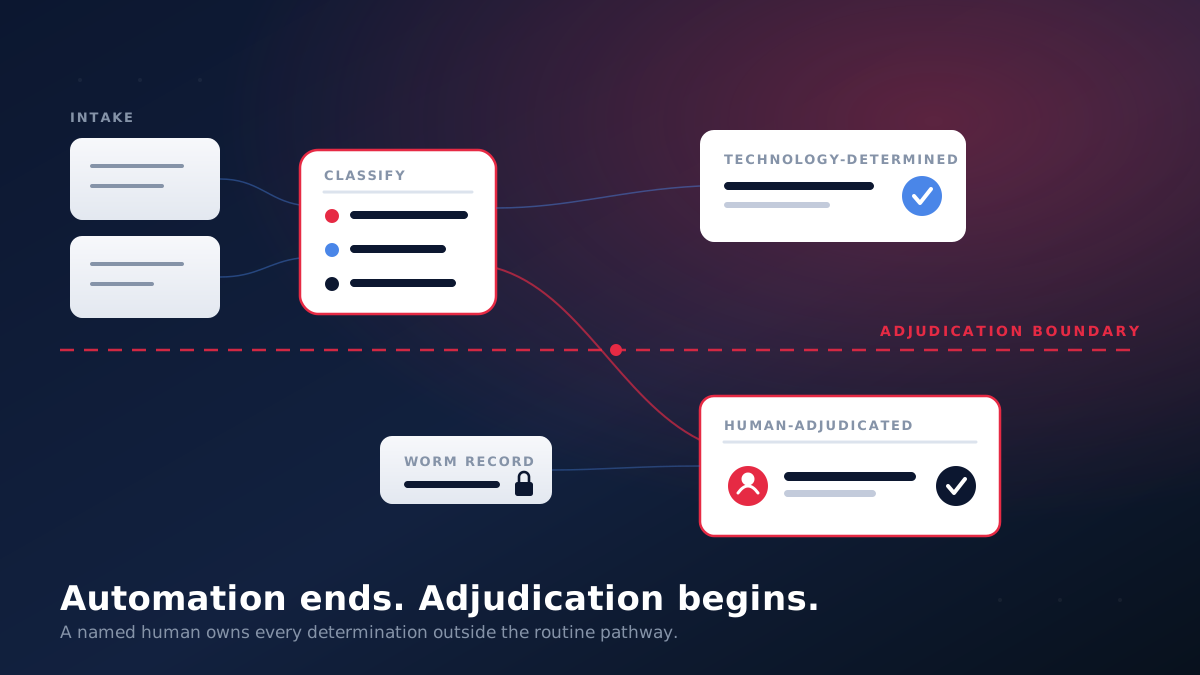
A durable framework treats the controls and the exceptions as two parts of the same accountability. Controls assign who decides access, who sets and checks quality, who governs retention, with each control owned by a named role rather than applied by default. Just as importantly, the framework gives exceptions an owner and a record. An exception path that routes the unusual case to an accountable decision-maker, captures who decided and why, and feeds the decision back into the standard is what keeps exceptions from becoming the undocumented gaps an audit later finds.
This is also where retention earns explicit ownership, because retention is the control most often left implicit. Someone must own how long each class of data is kept and on what basis, both because over-retention and inconsistent disposal create risk, and because, as the GAO’s reliability standard implies, an organization that cannot account for what it kept and what it discarded cannot fully account for its data. Assigning retention to an owner turns it from a default into a decision.
Where AI fits inside the framework
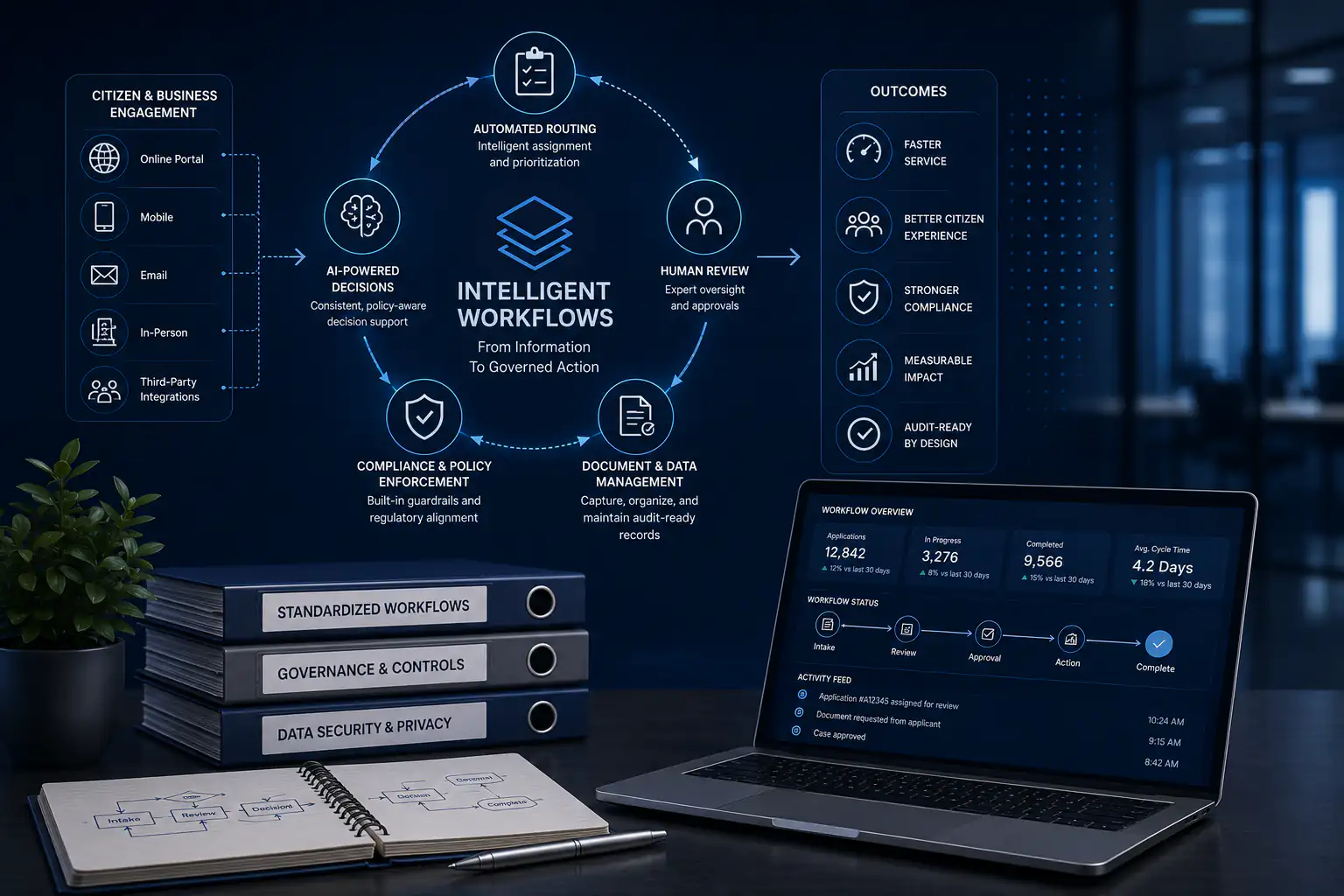
AI can assist in operating a data governance framework, provided the human governance is built into the workflow. AI is only practical when human governance is built into the workflow, and the framework is that governance. Inside it, AI assists by surfacing datasets that lack an assigned owner so a steward can be named, flagging where the same data element is defined inconsistently across divisions so the governance body can resolve it, classifying data by sensitivity so the right controls attach, and surfacing exceptions that were handled without a record so they can be brought back under the process.
In each case, AI supports the scale at which governance has to operate across a large, multi-division data estate, without becoming the owner of any decision. The data steward still owns the domain. The governance body still resolves the conflict. The accountable role still signs off on the control. AI assists with finding the gaps; it does not decide how to close them. The accountability is the human. AI does not accept responsibility for the data. People do.
The Result
The pattern is visible in the federal record, which is useful precisely because the government had to build this structure under statute and in public view. The GAO’s review of agency data governance found that agencies establishing governance did so by designating accountable data officers, standing up data governance bodies, and publishing the membership and charters of those bodies, the concrete machinery of assigned ownership. The same review tied effective data governance directly to data quality, framing governance not as administrative overhead but as the precondition for data an organization can actually rely on.
The reason the structure matters for both operations and compliance is that they ask the same underlying question. The GAO’s reliability standard requires that data used as evidence be assessable for accuracy, completeness, and applicability, and its AI Accountability Framework includes a data principle addressing the quality and reliability of the data an automated system depends on. Both presume an accountable owner and a record. A data governance framework is what produces both, which is why the same structure that makes daily operations more reliable is the structure that makes an audit answerable.
The architectural pattern is consistent across the government departments and regulated-industry organizations building this. Ownership is assigned to named roles, a senior accountable owner over the whole and stewards over each domain. A governance body holds the authority to set standards and resolve the conflicts that cross divisions. Controls for quality, access, and retention are each owned rather than applied by default. Exceptions are given an owner and a record so they stop being the undocumented gaps. None of this requires re-platforming the data an organization already runs. It requires the decisions about that data to be assigned to people, made in a venue that can resolve disagreement, and recorded so the ownership holds.
Sources:
- U.S. Government Accountability Office, Data Governance: Agencies Made Progress in Establishing Governance, but Need to Address Key Milestones, GAO-21-152, December 16, 2020. GAO-21-152 data governance report
- U.S. Government Accountability Office, DATA Act: OMB Needs to Formalize Data Governance for Reporting Federal Spending, GAO-19-284, March 22, 2019 (source of GAO’s five key data governance practices). GAO-19-284 DATA Act governance report
- U.S. Government Accountability Office, Assessing Data Reliability, GAO-20-283G, December 2019. GAO-20-283G data reliability guide
- U.S. Government Accountability Office, Artificial Intelligence: An Accountability Framework for Federal Agencies and Other Entities, GAO-21-519SP, June 30, 2021. GAO-21-519SP AI accountability framework
- Foundations for Evidence-Based Policymaking Act of 2018, Title II (OPEN Government Data Act), Pub. L. No. 115-435, § 202(e); Chief Data Officer functions codified at 44 U.S.C. § 3520. Foundations for Evidence-Based Policymaking Act of 2018
What tends to determine whether a data governance framework holds
Government departments and regulated-industry organizations that have built a data governance framework tend to find that three things determine whether it holds up rather than becoming another document on a shared drive.
The first is whether ownership was assigned to people or announced as a principle. A framework that declares data should be owned, without naming who owns which dataset, tends to reproduce the fragmentation it was meant to fix, because a principle no one is named against changes nothing on Monday. The frameworks that hold tend to be the ones where every consequential dataset has a steward who can be named and who knows they own it, and where a single senior role is accountable for the whole.
The second is whether the governance body can actually decide, or only advise. A data governance body that reviews and recommends but cannot resolve a definitional conflict between two divisions tends to leave the conflicts exactly where it found them. The frameworks that hold tend to be the ones where the body has the authority to adjudicate and the decisions are recorded, so a resolved conflict stays resolved instead of resurfacing the next time the divisions disagree.
The third is whether exceptions were brought into the framework or left outside it. A framework that governs the normal path beautifully but says nothing about the unusual case tends to discover, at audit time, that the risk had quietly accumulated in the exceptions no one owned. The frameworks that hold tend to be the ones that route exceptions to an accountable owner and capture the decision, so the departures from the standard are as documented as the standard itself.
These three travel together. Ownership assigned to named people gives every dataset an answer to who owns this, a governance body with real authority gives conflicts somewhere to be resolved, and owned exceptions keep the risk from collecting in the gaps. A framework with all three assigns ownership, controls, and accountability in a way that survives contact with a real organization. A framework missing any one of them tends to drift back toward the fragmentation it was built to end.
Key Takeaways
- Fragmented ownership is the disease; conflicting definitions and unclear quality are symptoms. When no one owns a dataset, no one can settle what its fields mean, set its quality bar, or decide its retention. A data governance framework treats the cause by assigning ownership, rather than treating each symptom separately.
- Conflicting definitions need an authority, not just a glossary. Two divisions defining the same element differently is a governance failure, not a vocabulary one. Among GAO’s key data governance practices is resolving conflicts in how data standards are applied, which requires someone empowered to decide and a record that makes the decision stick.
- Unowned exceptions are where the risk concentrates. Exceptions fall between divisions and get handled informally, becoming undocumented decisions. The framework’s job is to give exceptions an owner and a record, because the departures from the standard are where an audit finds the gaps.
- The audit assumes an ownership the fragmented organization lacks. GAO’s reliability standard requires data to be assessable for accuracy, completeness, and applicability, each of which presumes someone can speak for the data. Assigned ownership is what lets an organization vouch for data it already uses every day.
- Assign ownership to named roles and give the framework a body that can decide. The federal model, built under the Evidence Act, pairs an accountable senior data role with domain-level stewards and a governance body, chaired by that senior role, that sets standards and resolves cross-division conflicts. Ownership lives in named people; resolution lives in an empowered body.
GovSoft helps governments and entities operating within regulated industries build accountable, reviewable, and auditable systems. Because so much of the data this piece describes, patient records, credit decisions, underwriting files, is now flowing through AI systems as well as human ones, GovSoft has published a Regulated Industry AI Compliance Checklist that your team can download and run against your organization: a sector-specific walkthrough for healthcare (HIPAA), financial services, and insurance that names a Compliance Officer, Sector-Specific Counsel, Regulatory Affairs Lead, Business Owner, and IT Security Officer to each requirement, then tracks who is Assigned, Completed, and Verified on every safeguard, from business associate agreements to fair-lending analysis to unfair-discrimination testing. You can take it into a room, hand it around the table, and write a name next to each line. Where a line has no name, you have found a gap.
Download the Regulated Industry AI Compliance Checklist (PDF)
If, after walking the checklist, you find that the most consequential data in your organization, including the data now feeding your AI systems, has no clear owner, that definitional conflicts have no venue to be resolved, or that your exceptions are being handled without a record, that is the point where GovSoft becomes a conversation worth having. We help governments and entities operating within regulated industries assign ownership, stand up the governance structures that make decisions and resolve conflicts, and build the controls and records that hold up under review, with AI as a governed support layer inside the governance the leadership has defined and approved, and with no upfront fees and a structure where you pay from the operational value the work produces.
Reach the team at hello@govsoft.com.